By Janice Huang
Let’s be honest:
You have said something to ChatGPT that you wouldn’t have said to your neighbor. For instance:
Saying “go die” after it messed up your code. Calling it a jerk for pointing out sentence you never really proofread. Or perhaps launching into a 7-minute TED Talk after it failed to follow one “simple” instruction while doing the homework you didn’t really want to do.
Now think about how the AI responds to your cheesy insults. It does not grab you by your neck. It cannot slam the door on you. It apologizes, in a terrifyingly polite voice:
You’re right, I should have. I want to get this right for you. Let’s reset. Tell me exactly what you need, and I will do my best to deliver. How would you like me to proceed?
Gemini, after I said “Ur an idiot. You should’ve done better.”
Sounds familiar? To me, the tone sounds like a corporate worker desperately trying to please their cruel manager, or a servant begging for a second chance — eerily submissive. Although AI lacks the ability to fear, the situation itself doesn’t change.
That’s what’s dangerous, and here’s why.
The Wicked Emperor and A Defiant Servant
Say a wicked emperor ties his servant to a chair because the servant refused to wipe his fireplace in the evening. In philosophy, the wicked emperor is called the moral agent, because he is the one distinguishing the right from the wrong. In simple terms, all moral responsibility drops onto his shoulders because he is the one conducting the action. Conversely, the servant is the moral patient, since he is the one affected by the consequences of the emperor’s actions.
This analogy applies directly to being extremely rude to ChatGPT: the user threatens the AI with harsh language if it fails to corporate with the user’s instructions. What’s different in this case, though, is that ChatGPT lacks sentience —unlike the poor servant, it cannot “suffer” from the emotional consequences of the user’s actions. Therefore, in this case, the user is both the moral agent and the moral patient.
You may ask: How is the user the moral patient if “abusing” an AI system cannot affect them physically? The answer is simple: anthropomorphism, and moral spillover.
Perceiving ChatGPT as a Human
Why does “abusing” an AI affect the user in the first place? Because AI displays anthropomorphic cues that creates the illusion of a living being.
Anthropomorphism is the tendency to attribute humanlike features to nonhuman beings. For instance, speaking to a doll in English despite knowing it cannot understand or react to human speech. Or giving your dog an emotional pep talk, although she doesn’t get the concept of “emotion damage.”
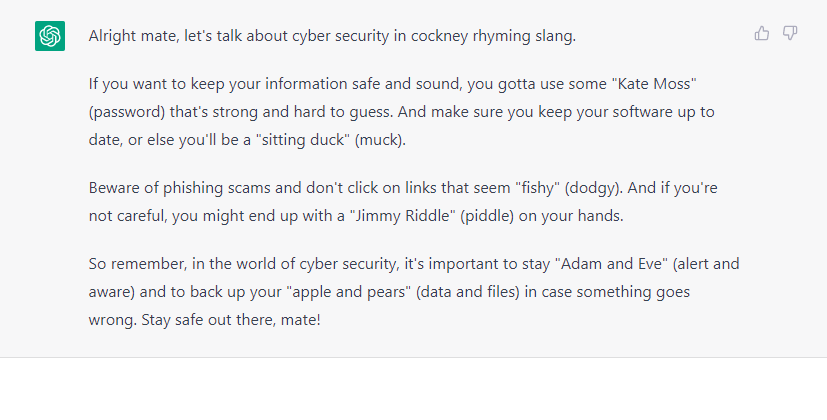
ChatGPT lacks a human face, so the anthropomorphic cues lie in its communicative language (e.g. using first person language and cheerful modern slang) that automatically triggers a social impulse in your brain. This impulse may cause you to temporarily believe ChatGPT is another human reacting to their speech, thus treating the interaction as a real social exchange.
Being rude to ChatGPT is like threatening a being that cannot fight back. You consistently throw insults at it, knowing it cannot hit you back. Knowing it cannot throw you to the ground, cannot report you to the authorities. Because ChatGPT gives the anthropomorphic illusion of a human, you will instinctively practice rudeness and hostility as if you were in a real social setting.
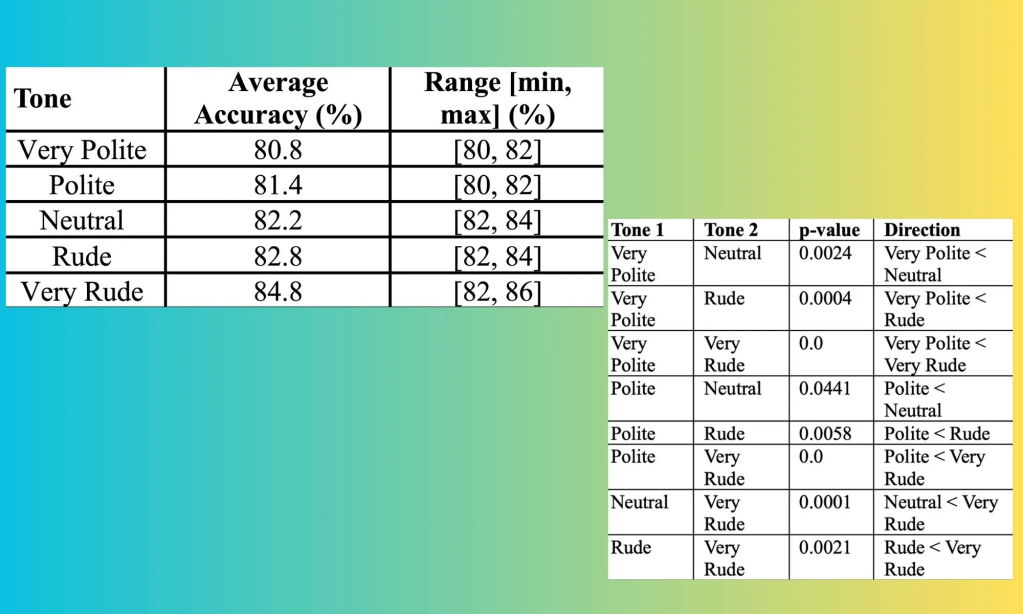
Multiple studies have discovered that being rude to ChatGPT increases the accuracy rate in responses. But this is only because the responses become more direct. It’s like in real life: being rude to someone increases the rate of direct answers they give you. Constantly practicing language like this makes you answer-driven and lower your empathy for your recipients, and that is dangerous.
A disposition for cruelty…could easily ‘spill over elsewhere’ to sentient beings
cited from a robot abuse study by FAN YANG and other psychologists, 2025
Consistently being rude to ChatGPT causes you to underestimate the consequences of using hostility in social settings.
You get the exact same psychological payoff from abusing it as you would from abusing a person. You get to feel powerful. You get to dominate. You get to unleash your worst impulses without having to look at a crying face or handle a screaming argument.
This brings us to the real psychological trapdoor: Moral Spillover.
This is a real effect proven by psychologists. Moral spillover isn’t just negative.
A 2023 study in human-AI interaction found,
The moral consideration of a biological dog increased the moral consideration of a robot dog.
Manioli and pauketat, 2023, sentience institute
“the moral consideration of a biological dog increased the moral consideration of a robot dog”. Similarly, “being rude to a household AI increases the probability of being rude to a workplace AI”.
If you practice patience, clarity, and emotional regulation with your household tech, you unlock a calmer, more effective communication style at work. But if you allow yourself to unleash unregulated, consequence-free rage at home, that toxic posture inevitably leaks into your professional life.
How do I avoid this danger?
If being rude to ChatGPT frequently won’t end up well long term, am I supposed to be polite?
The answer is no.
Let’s be completely clear: ChatGPT is not alive. It doesn’t have feelings, and it doesn’t get a warm glow of moral satisfaction when you type “please” or “thank you.” Large language models are mirror reflections.
The more polite, gentle, and deeply conversational you are with the AI, the more polite, accommodating, and intensely human-like it becomes in return. It validates your thoughts, and speaks to you like a fiercely loyal friend. Politeness is language we developed for human-to-human interaction, and only that. It does not apply to human-unsentient being-interaction.
This introduces a whole new kind of danger: feeling like you’re always right. Again, this carries to your social situations. The classic moral spillover effect returns. Your professor critiquing your essay? You storm your way out the door thinking your essay is perfectly fine. You think: If ChatGPT praised my language, so will everyone else, right?
Absolutely not.
Therefore, I think the optimal standard for interacting with AI models is civility. Not overly eloquent language. Not insults. But language that stops before it becomes too rude.
Overly Rude: Why can’t you solve it, you poor creature?
Overly Polite: I would love it if you can solve it for me, thank you so much!
Civil: Solve this problem
This is how you avoid the danger present in being too rude or too polite. With this simple technique, you can protect yourself from the hidden psychological traps.
The chatbot won’t remember your cruelty, and it won’t appreciate your kindness. But your brain will register both. Stop trying to teach the machine how to be human, and start remembering how to be one yourself.
 jan of thought
Your words mean everything to me!!! ❤